
Modernization services: Engineering operational resilience for core enterprise systems
Maximize the returns on your legacy technical capital by establishing a secure, high-performance architecture. 天美传媒 provides the infrastructure assurance framework required to modernize complex applications. Ensuring your mission-critical systems become scalable, cloud-ready assets.
140+ apps modernized for a single enterprise client. 90%+ of projects delivered ahead of deadline.





Is legacy software holding you back?
Obsolete tech drives up costs and security risks
Incompatible systems block growth and innovation

There is only one person who knows how to manage your systems.
Our legacy modernization services include

Audits and assessments
Tailored implementation strategies

Continuous support and management
Application refactoring and replatforming
.svg)
Cloud migration enablement听
Integration and automation
Reach your modernization goals, minimize risks, and optimize efficiency

Reduce your software maintenance costs by 30% or more

Improve your infrastructure performance by up to 70%

Enhance your systems鈥� uptime to 99.999%

Reach compliance with regulations and optimize your security measures

Easily integrate your software with third-party APIs and apps

Future-proof your technology stack with scalable, cloud-native solutions
Legacy technologies we work with
Oracle Exadata
Netezza
Microsoft Access
MIG 21
.NET
COBOL
VB6
IMS/DB2
Delphi
Perl
SAP ECC 6.0
MQSeries
Four steps to legacy system modernization
System audit
- Document current architecture and processes
- Identify technical constraints and business requirements
- Establish modernization goals and success criteria

Planning and architecture
- Create a migration and modernization roadmap
- Develop risk mitigation strategies
- Design future-state architecture
Migration
- Modular system modernization with continuous integration
- Rigorous testing to ensure business continuity
- Phased deployment with minimal disruption
Optimization and support
- Performance tuning and refinement
- Knowledge transfer and documentation
- Ongoing maintenance and evolution
De-risk your modernization roadmap
Schedule a strategy session with our modernization advisors. We will review your legacy technical debt and provide a clear roadmap for long-term stability and performance.
book a strategy session
Bridge the gap between legacy and cloud-native
Digital transformation often stalls due to unforeseen architectural "holes." To avoid such issues, we created Cloud Orbit, a modular platform engineering solution for all infrastructure-related problems.听
Cloud Orbit uses open-source templates to plug these architectural gaps and accelerate high-stakes projects. Combined with our Infrastructure Assurance Framework (IAF), it ensures that your migration is not just fast, but follows a standardized, high-integrity blueprint.
Your engine for legacy modernization
Maximize your capital efficiency and technical scale by leveraging our specialized global hubs. This dual-center model is specifically designed to provide total continuity and de-risk the execution of your complex legacy software modernization project.
This center serves as our headquarters for operational quality and migration excellence. It drives high standards in regulatory governance, rigorous modernization protocols, and standardized project management required for migrating and re-platforming legacy systems.
This hub serves as our primary engineering engine for deep technical transformation. It focuses on delivering profound technical scale in next-generation architectures, including cloud platforms, Kubernetes orchestration, and AI integration, necessary to transform aging legacy applications.
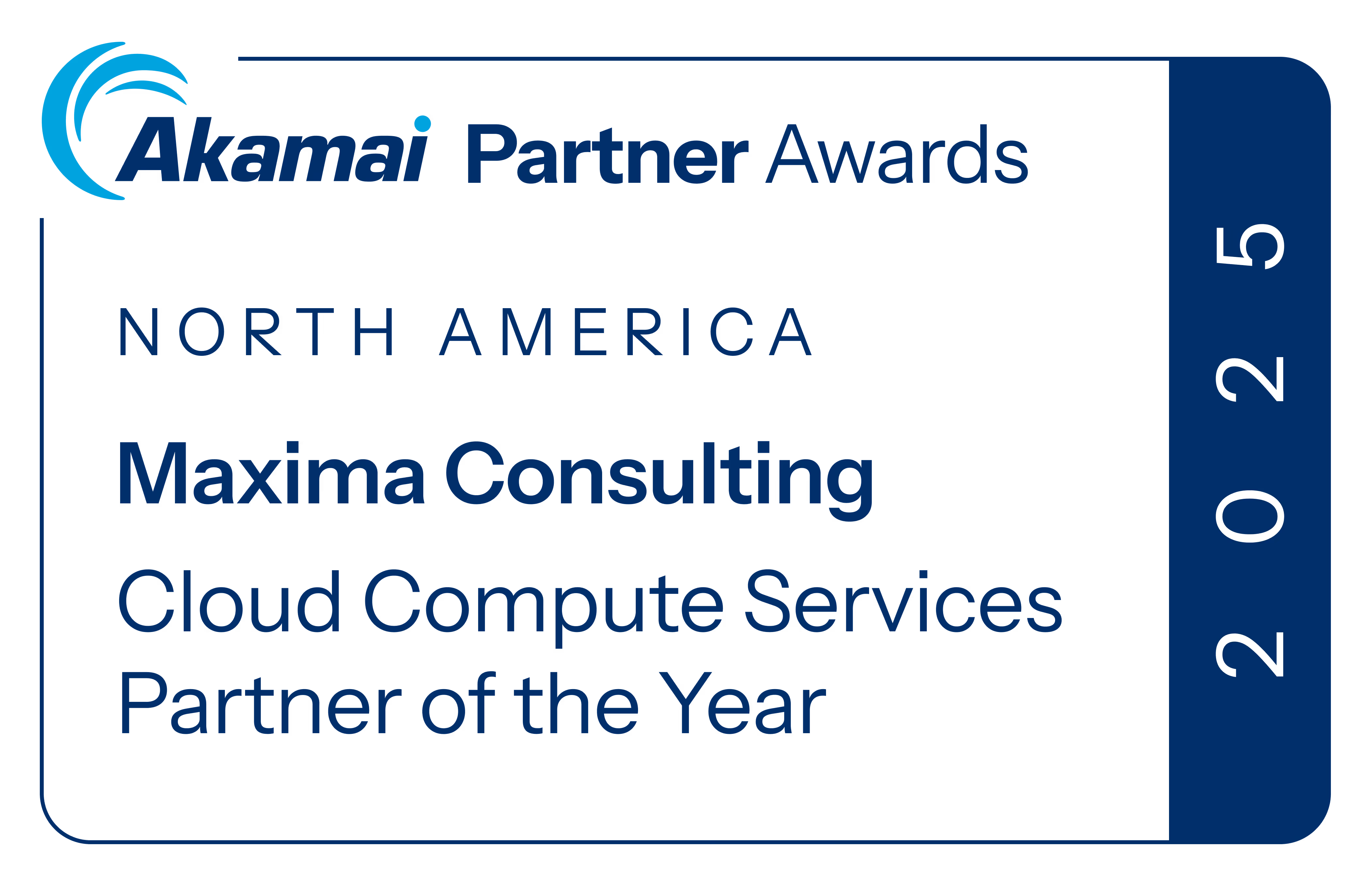
天美传媒 is Akamai's Cloud Compute Services Partner of the Year
Case study: Remodelling 140+ individual apps

Client
A large U.S.-based insurance provider with rigorous compliance requirements.
Challenge
The client needed to remodel and migrate over 140 individual legacy applications before moving to a new cloud environment.
鈥�Solution
Maxima implemented a "modernization factory" model, utilizing template-based remodeling to ensure consistency and speed across the entire estate.
鈥�Steps we took
Successfully modernized 140+ apps, reducing maintenance costs while enabling continuous integration and delivery (CI/CD) pipelines.